Living Cultural Heritage
Ptaškowa swajźba/Bird wedding
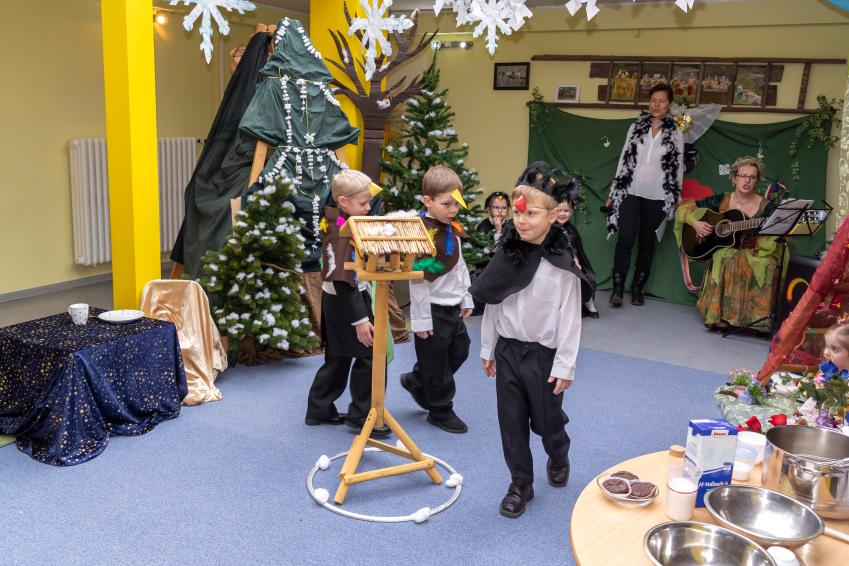
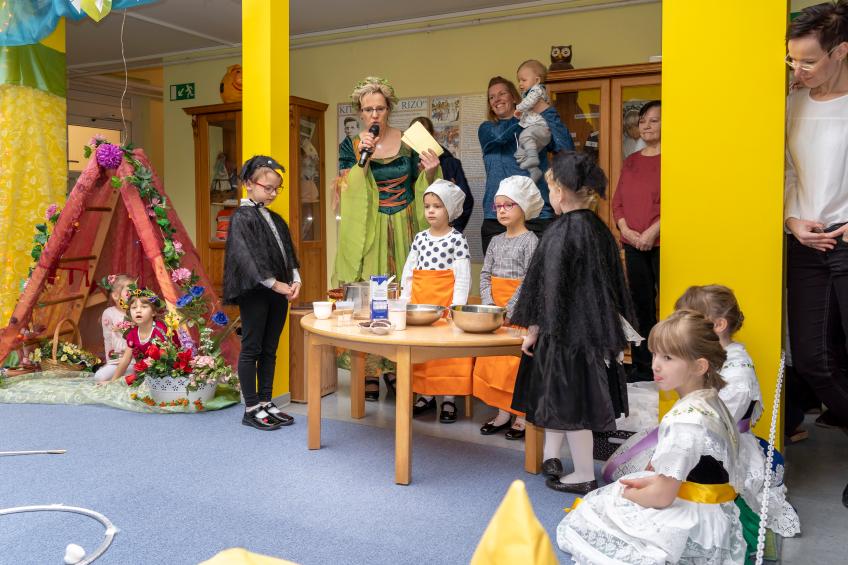
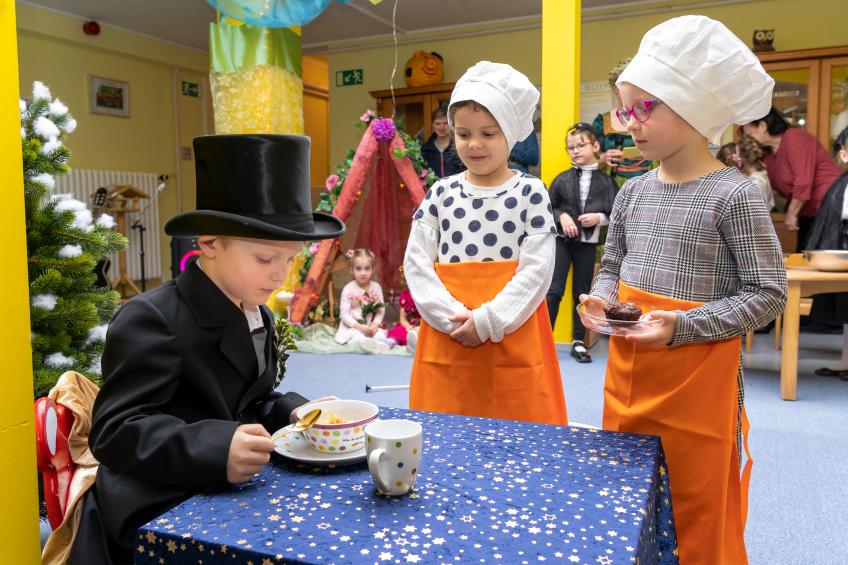
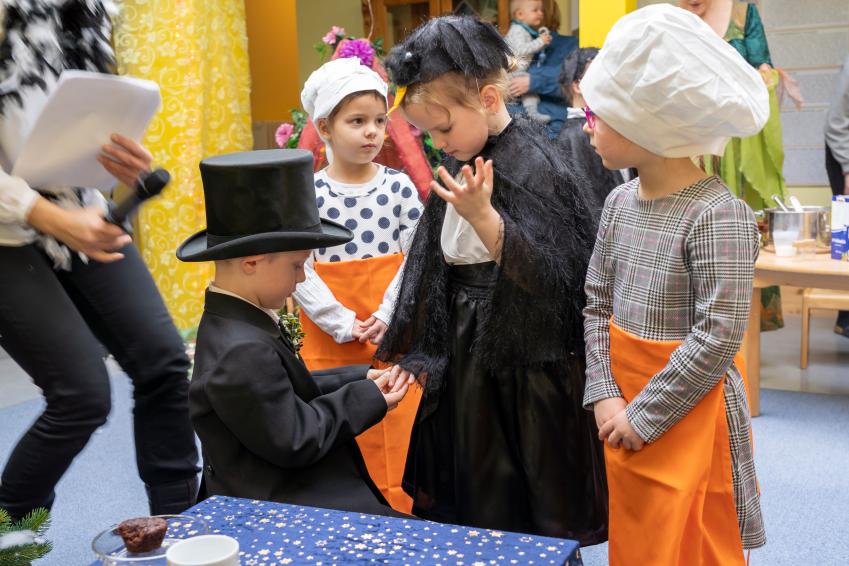
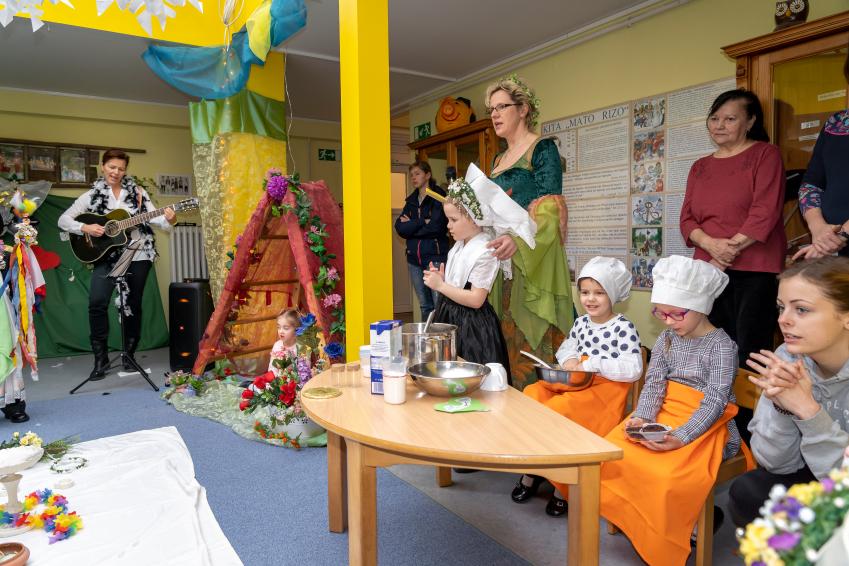
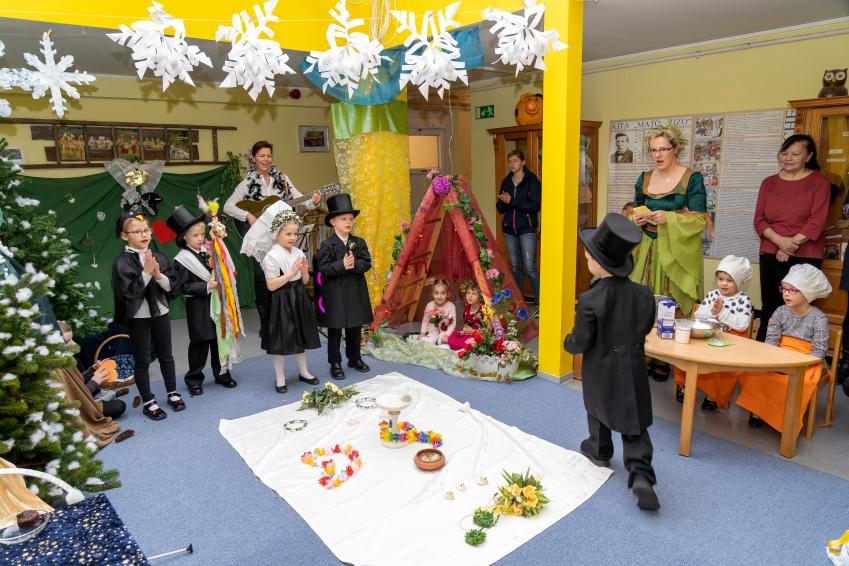
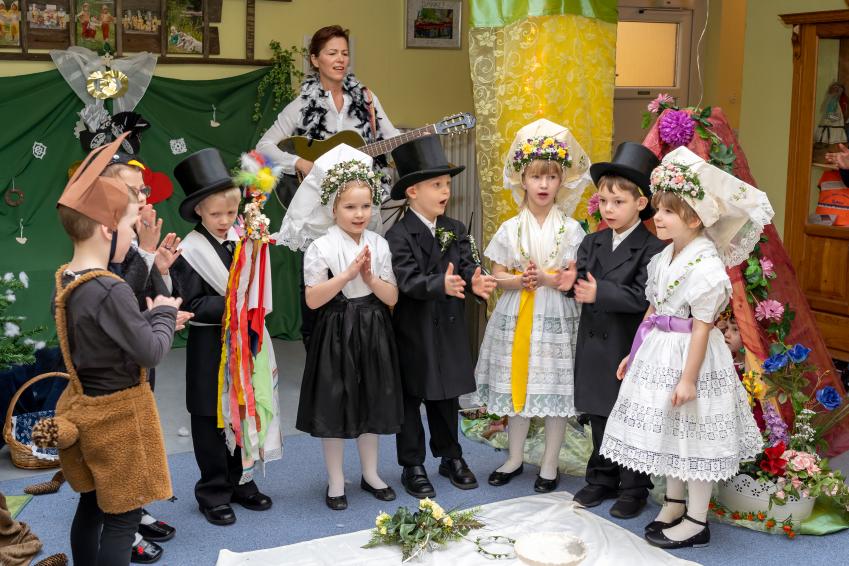
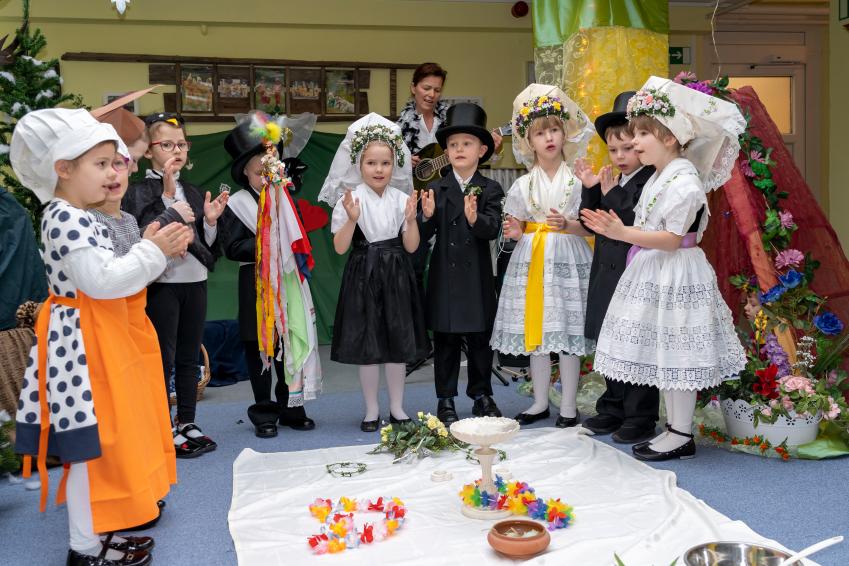
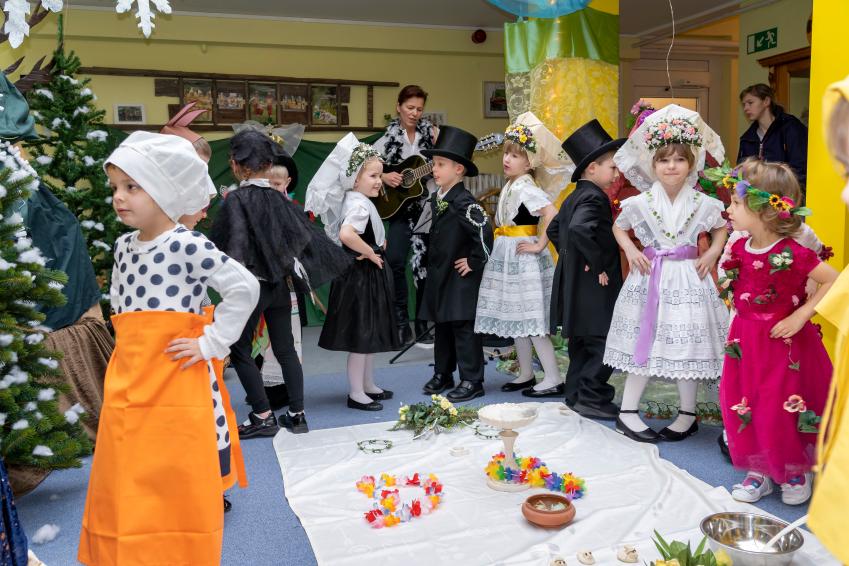
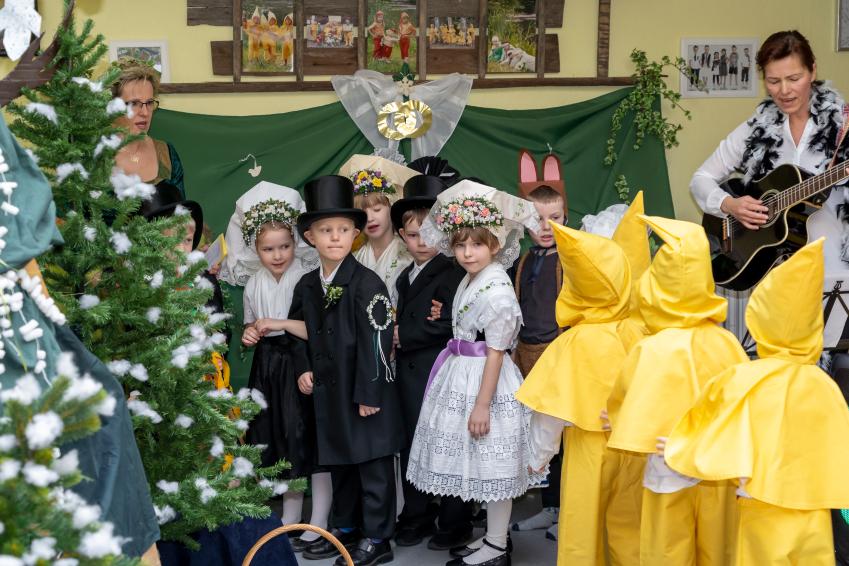
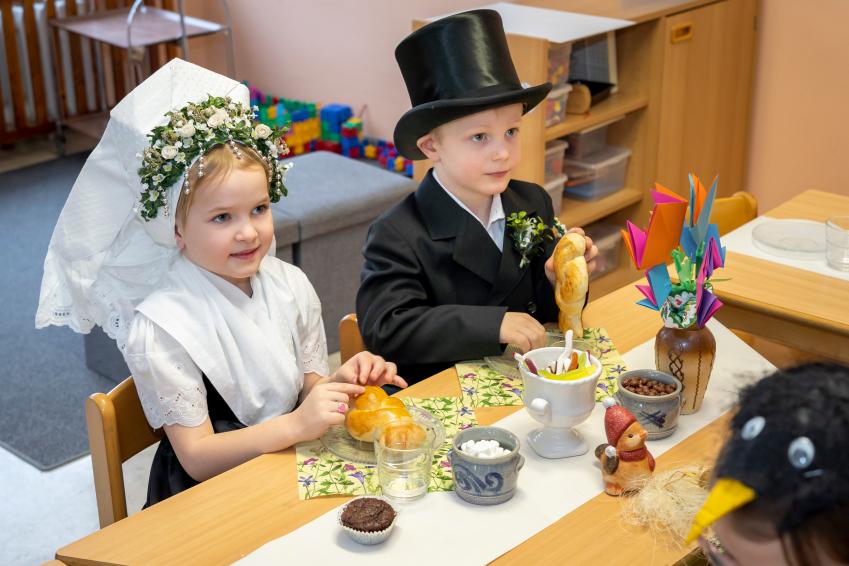
Ptaškowa swajźba (literally ‘the wedding of the birds’) on 25 January is a popular custom in which children in particular receive gifts. As a thank you for feeding them in winter, birds place various baked goods on the plates provided including nests or birds made from chocolate-coated buttercream, meringue birds, or sroki (Sorbian for ‘magpies’), that is, milk bread dough baked in the shape of a nesting bird.
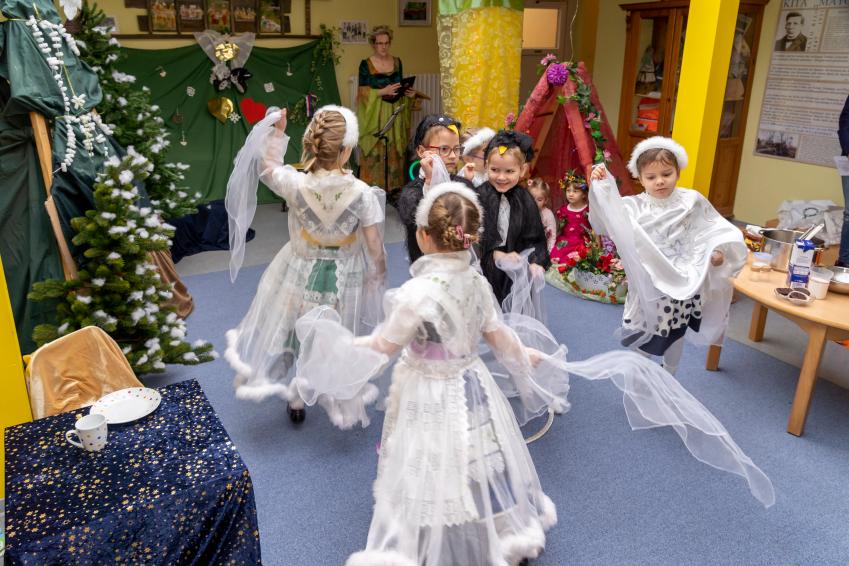
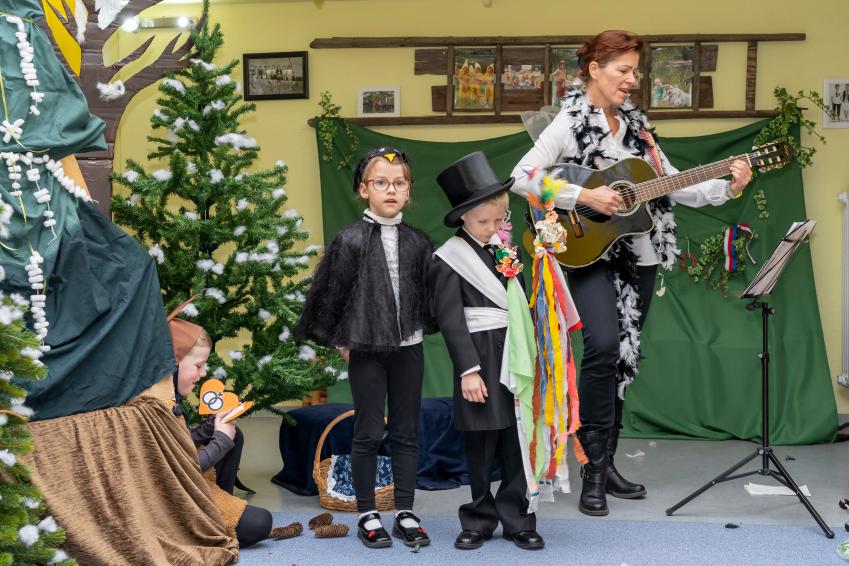
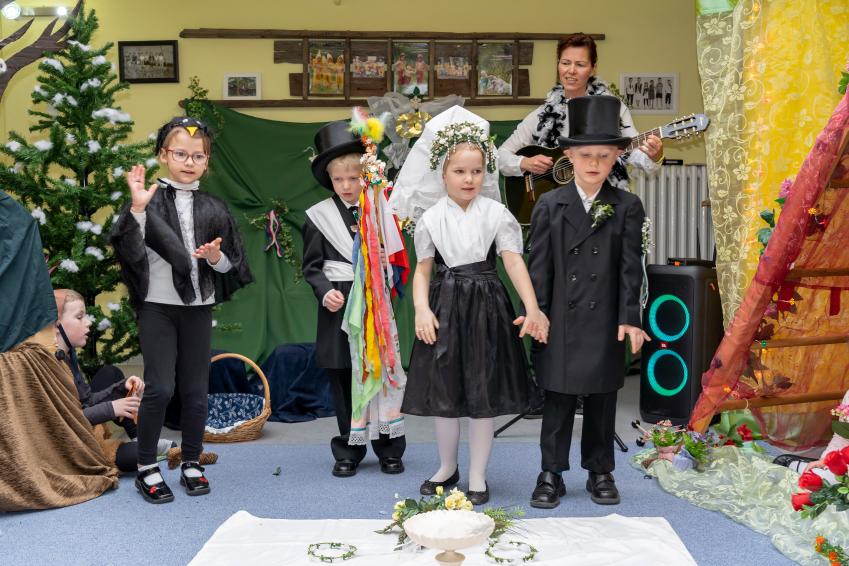
Traditionally ptaškowa swajźba was celebrated in Upper Lusatia where it is known as ptači kwas. From there the custom spread to Lower Lusatia through the efforts of kindergarten and primary school teachers. Since the 1960s, the ptaškowa swajźba has been re-enacted in many kindergartens and primary schools. Children dress up as birds, parade through the village and perform short programmes. In Sorbian kindergartens, they wear the regional wedding costumes and re-enact a traditional wedding party.
At the end of the 19th century, a tradition of evening events for adults emerged. Since the mid-20th century, the State Ensemble for Sorbian Folk Culture (now the Sorbian National Ensemble) has organized programmes featuring a mixture of stage performances with folkloric elements and revue. This event is held annually at various locations in Lusatia, in Lower Lusatia under the name of the traditional custom zapust (Shrove Tuesday, Madri Gras). There is a separate programme for children throughout Lusatia.
This is living cultural heritage that is characterised by its dynamism. This means that it changes, adapts and evolves in its practice and transmission over generations. This is how it is passed on and remains alive.